
Traveling with a large dog can seem fun and exciting. Long drives, walking on the beach, and hiking in the mountains all seem like fun things to do together; however, the reality is, many owners of large breeds wonder – is it really that easy to travel with a large dog?
While small dogs can easily fit under the seat on an airplane or in a small carrier for travel, large dogs require much more thought and planning in order to travel successfully. Traveling with a large dog requires knowing all transportation rules and policies at hotels; understanding safety tips as well as making your dog comfortable. Traveling with a large dog has many unique challenges; however, if you plan your trip appropriately, you will be able to enjoy a smooth, pleasant and stress free trip.
No matter if you are the proud owner of a gentle giant such as a Labrador Retriever, an energetic German Shepherd or a giant breed of dog such as a Great Dane; being knowledgeable about what to expect will make all of the difference.
The everything you need to know owner’s guide to traveling with a large dog will help to answer questions relating to transportation options, airline regulations, road trip tips, accommodations and practical preparation steps so that you can make an informed decision as to whether or not traveling with your large dog is going to be easy, manageable or require extra planning.
Why Large Dogs Need Extra Travel Planning?
Traveling with a large dog comes with challenges that smaller breeds simply don’t face. Size alone changes everything — from the type of vehicle you need to the airline policies you must follow.
Space and Vehicle Considerations
Larger dogs need a lot more space to sit, lie down, and change position while traveling. In a car, this can mean folding down the back seats, utilizing a large cargo area, or purchasing a crash-tested dog travel crate. Small back seats that might be fine for smaller animals can become very uncomfortable or even dangerous for larger breeds on longer journeys. Good airflow and the dog’s ability to change position comfortably become much more critical when traveling times go beyond a couple of hours.
Airline Weight and Carrier Limits
Air travel introduces stricter limitations. Most airlines only allow pets in the cabin if the carrier fits under the seat and the dog can stand and turn around inside it. For large dogs, that’s rarely possible. As a result, they typically must travel in a hard-sided crate in the cargo hold, where total weight (dog plus crate) and crate dimensions must meet aircraft-specific rules. These restrictions make advance planning essential and can limit route options.
Heat Sensitivity in Larger Breeds
Large dogs tend to generate and retain more body heat. During travel — especially in summer — this can increase the risk of overheating in parked cars, poorly ventilated spaces, or hot climates. Thick-coated and brachycephalic (short-nosed) large breeds are particularly vulnerable. Monitoring temperature, ensuring airflow, and scheduling travel during cooler parts of the day becomes more critical when transporting bigger dogs.
Higher Energy Needs During Travel
Many large breeds are working or high-energy dogs. Long periods of confinement without movement can lead to restlessness, anxiety, or behavioral issues. Unlike smaller lap dogs that may settle easily, bigger dogs often require planned exercise breaks, mental stimulation, and structured stops during road trips. Skipping these breaks can make the journey stressful for both the dog and the owner.
Because of these factors, traveling with a large dog isn’t just a scaled-up version of traveling with a small one — it requires different planning, equipment, and expectations from start to finish.
Road Trips with a Large Dog (Often the Best Option)
For many owners, road travel is the most practical and least restrictive way to move a large dog. Unlike air travel, you control the schedule, temperature, and comfort setup — which can significantly reduce stress for both you and your dog.
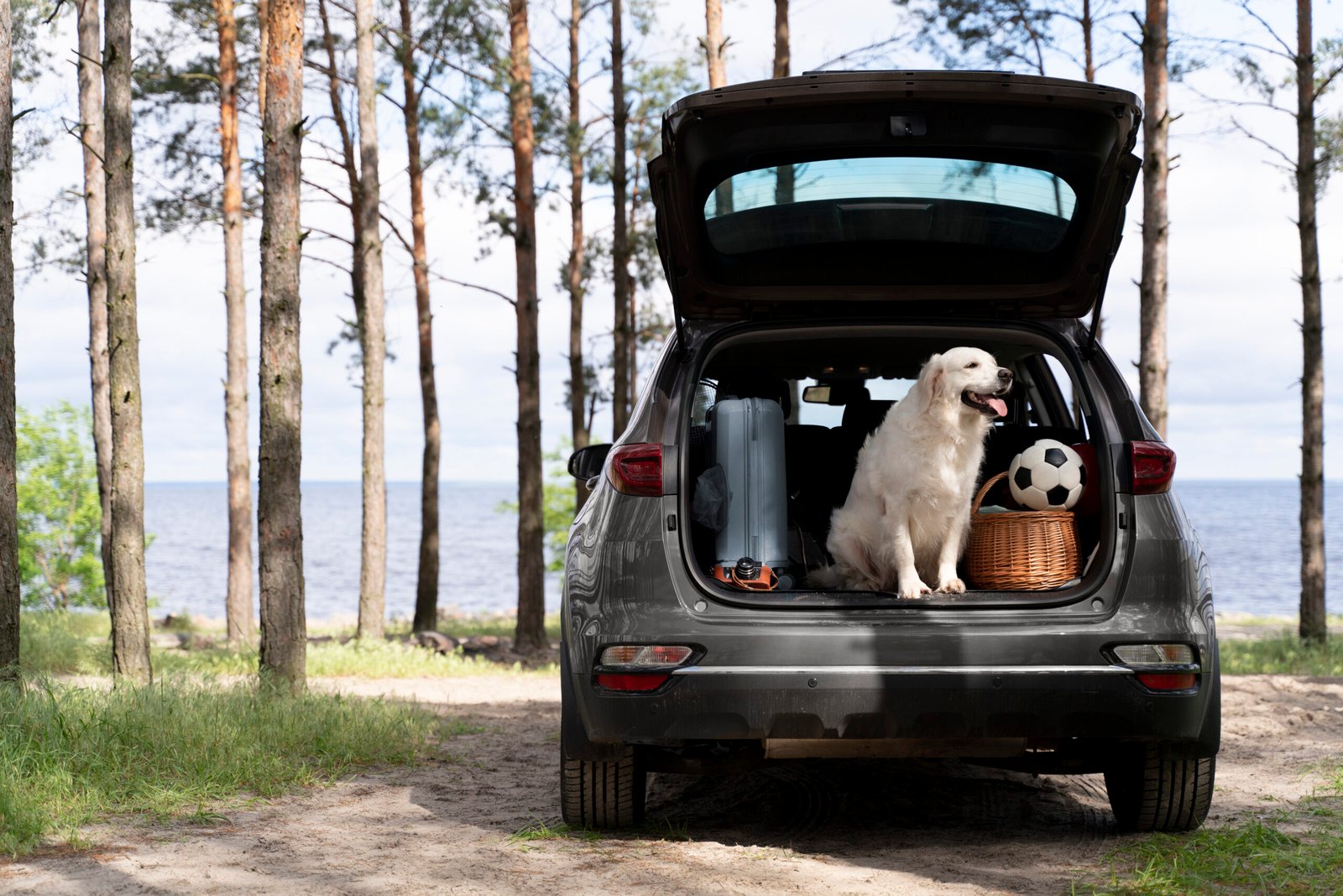
Choosing the Right Vehicle Setup
SUVs and crossovers are typically more practical than sedans because they offer a taller, wider cargo area that allows large dogs to sit upright and turn around comfortably. The flat rear space also makes it easier to install crates, barriers, or travel beds. Sedans, by contrast, often lack vertical space and airflow in the back seat, which can quickly feel cramped on longer drives.
For safety and comfort, prioritize:
- Secured cargo area or barrier
- Crash-tested harness or properly sized crate
- Adequate ventilation and shade
Keeping Your Dog Comfortable on Long Drives
Comfort isn’t just about space — it’s about managing energy, hydration, and temperature throughout the trip. A simple plan can prevent restlessness, overheating, and travel fatigue.
- Plan stretch breaks every 2–3 hours
- Offer water regularly without overfeeding
- Use cooling mats or breathable bedding in warm weather
With the right vehicle setup and a structured travel routine, road trips can be one of the safest and most comfortable ways to travel with a large dog.
Flying with a Large Dog (What to Expect)
For most large dogs, flying in the cabin simply isn’t an option. Airlines require pets to fit comfortably inside a carrier that can be placed under the seat in front of you, with enough room to stand, turn around, and lie down naturally. Large breeds exceed those size limits, which means they typically must travel in the aircraft’s cargo hold rather than alongside you in the passenger cabin.
Cargo travel for dogs is usually conducted in a pressurized, temperature-controlled compartment designed for live animals. Your dog must travel in an airline-approved, hard-sided crate that meets specific size requirements — large enough for natural movement but still within aircraft space limits. You’ll check your dog in before security, and pickup often occurs at a designated cargo or oversized baggage area upon arrival. While many airlines handle pet cargo routinely, it’s a very different experience from in-cabin travel and requires additional preparation.
Temperature restrictions are another practical reality. Airlines often impose heat and cold embargoes during extreme weather to protect animals. If temperatures at departure, arrival, or connecting cities fall outside approved ranges, your dog may not be allowed to fly. This can limit summer and winter travel options, particularly for large or thick-coated breeds that are more sensitive to heat stress.
Advance booking is typically required because airlines limit the number of pets allowed per flight — especially in cargo. Some routes, aircraft types, or connection times may not accommodate large crates at all. That means you may need flexible travel dates and extra coordination to secure a spot.
For example, American Airlines allows small pets in the cabin if they fit under the seat, but larger dogs generally must travel through their cargo services, with crate size and aircraft type determining eligibility. Similarly, Delta Air Lines permits small in-cabin pets on select routes, while larger dogs are transported via cargo under size, weight, and seasonal temperature guidelines.
The key takeaway: flying with a large dog is possible, but it involves stricter size limits, weather considerations, and advance planning compared to traveling with smaller pets.
Finding Hotels That Accept Large Dogs
Finding accommodations for a large dog can take more effort than booking a standard pet-friendly room. While many hotels advertise themselves as “pet-friendly,” they often impose weight limits — commonly between 50 and 75 pounds — which can automatically exclude larger breeds. Some properties also enforce breed restrictions or limit the number of pets per room. Because policies vary widely by location (even within the same hotel chain), it’s important not to rely solely on what’s listed online.
Before booking, take a few extra steps:
- Always call ahead to confirm size limits
- Ask about pet fees and deposits
- Request ground-floor rooms if possible
Ground-floor access can make bathroom breaks easier and reduce stress when moving a large dog through elevators and narrow hallways.
To simplify your search, you can use specialized platforms like pethotelbooking.com, which provide curated lists of pet-friendly hotels in various destinations. While these platforms makes it easier to discover accommodation options that welcome pets, details such as weight limits, breed guidelines, and fees are typically set by each individual hotel — so it’s a good idea to contact the property directly to confirm the specifics before finalizing your booking.
What to Pack for a Large Breed Dog
When traveling with a large dog, packing requires a bit more planning than it would for a smaller pet. Larger breeds need bigger portions, heavier gear, and more space-consuming essentials. Preparing the right items ahead of time helps keep your dog comfortable, reduces stress, and prevents last-minute stops for oversized supplies.
Here’s a compact checklist to keep things simple:
- Extra food and a collapsible water bowl
- Elevated or familiar feeding setup
- XL bedding or a blanket from home
- Joint support if your dog is older
- Towels for cleanup
Having these essentials ready makes traveling with a large dog smoother, especially on longer road trips or overnight stays.
Common Mistakes to Avoid
When traveling with a large dog, many challenges come from simple oversights rather than major problems. A little planning goes a long way, and avoiding a few common mistakes can prevent unnecessary stress for both you and your dog.
- Underestimating space needs – Large dogs need more than just “a spot” in the car — they need room to sit upright, turn around, and lie down comfortably. Cramped spaces can lead to stiffness, anxiety, and overheating on longer trips. When traveling with a large dog, always measure your cargo area or back seat space in advance rather than assuming it will be enough.
- Skipping pre-travel exercise – A high-energy dog that hasn’t burned off energy before departure is far more likely to become restless during travel. Even a 20–30 minute walk or play session can make a noticeable difference. When traveling with a large dog, a tired dog is usually a calmer, more settled traveler.
- Ignoring hotel weight limits – Many hotels advertise themselves as pet-friendly but quietly enforce weight caps between 50 and 75 pounds. Showing up with a 90-pound dog without confirming policies can lead to denied check-in or unexpected fees. When traveling with a large dog, always verify size restrictions directly with the property beforehand.
- Booking flights during peak heat seasons – Airlines often restrict pet cargo travel during extreme temperatures to protect animals. Summer months can trigger heat embargoes, especially in warmer states, which may delay or cancel pet transport. When traveling with a large dog by air, choosing cooler travel dates significantly reduces risk and scheduling issues.
Being proactive about these details makes traveling with a large dog safer, smoother, and far more comfortable.
FAQ
Conclusion
Traveling with a large dog requires more planning, more space, and often more flexibility — but it’s absolutely manageable with the right preparation. From choosing the right vehicle setup to understanding airline limitations and hotel policies, each decision plays a role in keeping your dog safe and comfortable.
The key is thinking ahead. Larger breeds have different physical needs, higher energy levels, and stricter travel constraints than smaller pets. When you plan for space, temperature, rest breaks, and proper gear, you reduce stress for both you and your dog.
Ultimately, traveling with a large dog isn’t about limiting your adventures — it’s about preparing wisely so you can enjoy them together.